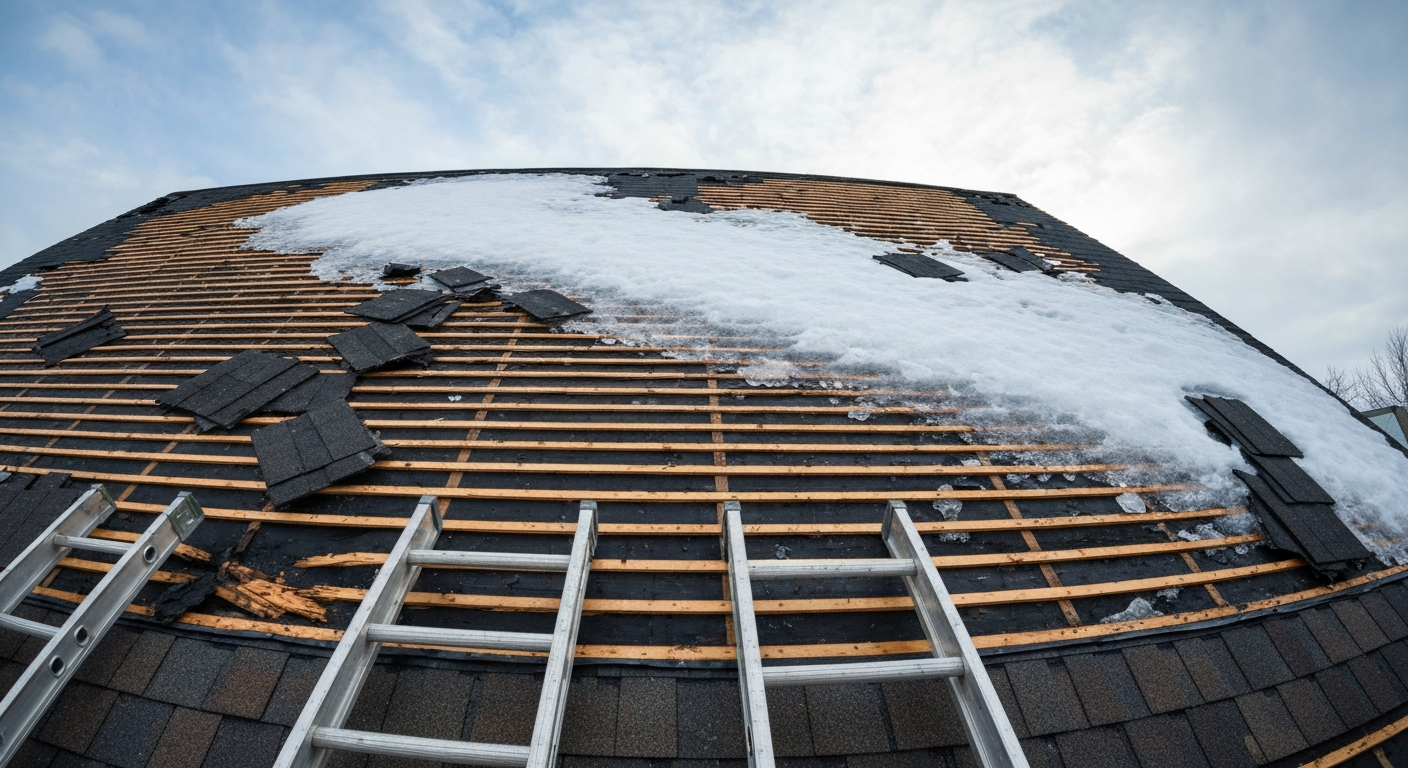
No roof in Canada takes a beating quite like one on the prairies. Regina and Saskatoon homeowners deal with a punishing combination: sustained temperatures hitting -40°C, relentless winds that can exceed 80 km/h, heavy snowpack that sits for months, and then a rapid spring thaw that sends all that water somewhere. After a full prairie winter, your roof deserves a thorough inspection — and knowing what to look for can save you thousands.
Saskatchewan's climate is uniquely destructive to roofing systems. The province experiences more than 100 freeze-thaw cycles annually — more than most other Canadian regions. Each cycle causes roofing materials to expand and contract, accelerating deterioration of shingles, flashing, and sealants. Add in the extreme temperature swings (from -40°C in January to +35°C in July), intense UV exposure during long summer days, and the occasional hailstorm, and you have conditions that can reduce a roof's expected lifespan by 5–10 years compared to milder climates.
Ice dams are among the most destructive winter roof problems in Saskatchewan. They form when heat escaping through your attic warms the upper portions of the roof, melting snow. That meltwater runs down and refreezes at the cold roof edge and eaves, forming a wall of ice. Pressure builds up behind the dam and water backs up under shingles, soaking into decking and eventually into your ceilings and walls.
The physics of ice dam formation are particularly problematic in Saskatchewan because of the sustained cold. Unlike regions where temperatures fluctuate above freezing during the day, prairie winters keep eaves frozen solid for weeks at a time. This means once an ice dam forms, it continues to grow throughout the winter, creating increasingly severe backup conditions. A single ice dam event can force water under shingles, saturate roof sheathing, compress attic insulation, and cause thousands of dollars in interior damage before you even notice the problem.
The root cause of ice dams is almost always insufficient attic insulation or ventilation. If you're seeing repeated ice dam damage, a professional assessment of your attic's thermal performance is the real fix — not just patching damaged shingles year after year. Saskatchewan building code requires a minimum of R-50 attic insulation for new construction, but many older homes in Regina's Cathedral area, Saskatoon's Nutana, or rural properties built before 2000 have only R-30 or less. Upgrading attic insulation to R-60 and ensuring proper soffit-to-ridge ventilation (1 square foot of ventilation per 300 square feet of attic space) typically costs $2,500–$6,000 but eliminates ice dam formation entirely.
Prairie winds are relentless. In both Regina and Saskatoon, gusts regularly exceed 70–80 km/h during winter storms, and asphalt shingles have a failure point. Standard three-tab shingles are rated to approximately 90 km/h wind uplift; architectural shingles fare better at 110–130 km/h. After a significant wind event — particularly the notorious spring chinook winds that can hit southern Saskatchewan in March and April — look for:
Wind damage often goes unnoticed until it's severe because homeowners don't regularly inspect their roofs from above. A few missing shingles on the north-facing slope might not be visible from the street, but they create entry points for wind-driven rain and snow. In Saskatchewan's climate, even small breaches can lead to significant water damage during spring melt or summer thunderstorms.
Standard asphalt shingles last 15–25 years in prairie conditions — significantly less than the 25–30 year ratings often cited for milder Canadian climates. The freeze-thaw cycling, UV exposure from long summer days, and wind uplift all accelerate degradation. Impact-resistant shingles (Class 4 rating) are well worth the premium for Saskatchewan homes given the hail exposure in the region. These shingles cost approximately $1–$2 more per square foot but can qualify you for insurance discounts of 10–20% on your home policy.
Metal roofing lasts 40–70 years in prairie conditions and handles ice dam risk better because its smooth surface allows snow to slide rather than accumulate. The higher upfront cost ($12,000–$20,000+ for an average 1,800 square foot home vs. $6,000–$12,000 for asphalt) is often offset by the elimination of re-roofing costs over a 40-year ownership horizon. Metal roofs also shed snow more effectively, reducing structural load concerns during heavy snowfall years. For homes in White City, Pilot Butte, or rural areas where snow removal from roofs is impractical, metal roofing provides significant peace of mind.
Standing-seam metal roofs are particularly well-suited to Saskatchewan because the interlocking panels have no exposed fasteners to work loose during wind events. While the initial investment is substantial, homeowners who plan to stay in their homes long-term often find metal roofing pays for itself through reduced maintenance, eliminated replacement costs, and lower heating bills (metal roofs with proper underlayment provide better thermal performance than aged asphalt shingles).
Flashing is the metal material that seals the joints where your roof meets vertical surfaces — chimneys, dormers, skylights, plumbing vents, and roof valleys. In Saskatchewan's climate, flashing is particularly vulnerable because the metal expands and contracts with temperature swings, and the sealant used around it degrades in UV and cold. After winter, inspect or have inspected:
Flashing repairs are relatively inexpensive when caught early — typically $300–$800 per location depending on accessibility and the extent of damage. However, if flashing failures go undetected for multiple seasons, the resulting water damage to roof sheathing, wall framing, and insulation can cost $3,000–$8,000 to remediate. This is why post-winter inspections are so critical: a $75 tube of high-quality roofing sealant applied to compromised chimney flashing in April can prevent a $5,000 interior water damage claim by August.
Attic condensation is often mistaken for a roof leak. During cold Saskatchewan winters, warm moist air from living spaces rises into the attic. If the attic is poorly ventilated, this moisture condenses on cold sheathing and rafters — producing frost, dripping water, mold growth, and eventually structural damage to roof framing.
The problem is particularly severe in Saskatchewan because of the extreme temperature differential between heated living spaces (20–22°C) and outdoor air (-30°C to -40°C). This creates ideal conditions for condensation. Every shower, load of laundry, pot of boiling water, and even human respiration adds moisture to indoor air. Without proper air sealing at the attic floor and adequate ventilation to exhaust that moisture, it accumulates on cold surfaces.
Solving attic condensation requires a two-part approach: sealing air leaks from the living space and improving ventilation. Air sealing involves caulking around plumbing penetrations, electrical boxes, and the attic hatch, plus adding weatherstripping to the hatch itself. This work typically costs $500–$1,200 when done professionally. Ventilation improvements might include adding soffit vents, installing a ridge vent, or adding gable vents to create proper airflow. Ventilation upgrades cost $800–$2,500 depending on the scope.
Many Saskatchewan homeowners are surprised to learn their attic condensation problem isn't a roof leak at all. A professional inspection can differentiate between the two by checking for water stains that follow a path from the roof surface downward (indicating a leak) versus widespread dampness or frost on sheathing (indicating condensation). This distinction is crucial because the fixes are completely different.
Saskatchewan building code requires roofs to withstand snow loads of 1.5–2.5 kPa (kilopascals) depending on location, but exceptional winters can exceed these design limits. The winter of 2013–2014 saw record snowfall across southern Saskatchewan, and several commercial and agricultural buildings experienced partial roof collapses. While residential roofs are typically built with greater safety margins, prolonged heavy snow accumulation can still cause problems.
If you observe any of these signs during winter, it's critical to have snow professionally removed from your roof immediately. Roof snow removal services in Regina and Saskatoon typically charge $300–$800 depending on roof size and accessibility. This is far less expensive than repairing structural damage or dealing with a partial roof collapse.
For homes with low-slope or flat roofs — common in mid-century bungalows throughout Regina's Normanview or Saskatoon's Eastview — snow load monitoring is especially important. These roofs don't shed snow naturally, and drifting can create concentrated loads that exceed design limits. Installing snow guards or planning for regular snow removal can prevent problems.
After identifying winter damage, homeowners face the critical decision: repair or replace? The answer depends on the roof's age, the extent of damage, and your long-term plans for the home. Here's a detailed cost breakdown for Saskatchewan homeowners in 2025:
| Repair Type | Cost Range (CAD) | When Appropriate | Expected Lifespan |
|---|---|---|---|
| Minor shingle replacement (10–20 shingles) | $400–$900 | Isolated wind damage, roof <10 years old | Matches remaining roof life |
| Flashing repair (single location) | $300–$800 | Chimney, vent, or valley flashing failure | 10–15 years with quality materials |
| Ice dam damage repair | $800–$2,500 | Eave damage, limited to lower 2–3 feet | Until next ice dam event |
| Partial roof section replacement | $2,500–$6,000 | One slope damaged, rest of roof sound | 15–25 years (new section only) |
| Full roof replacement (asphalt, 1,800 sq ft) | $8,000–$15,000 |
