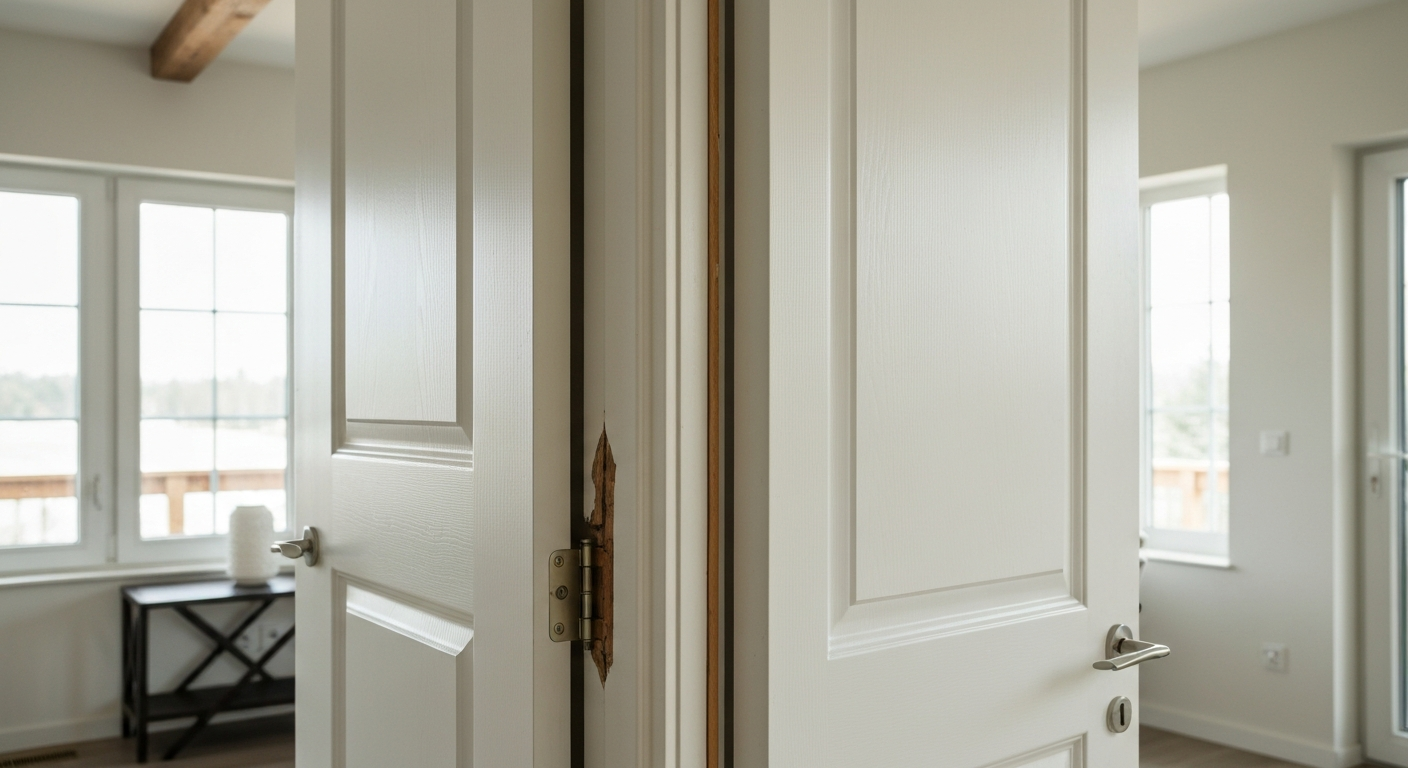
Every spring, thousands of Saskatchewan homeowners notice the same thing: doors that latched fine in November suddenly won't close properly in March. Windows that sealed tightly through the summer are now drafty or won't open at all. In most cases, this isn't random — it's the predictable result of what -40°C winters do to a home's structure and materials.
Understanding the cause helps you understand whether the fix is a $15 can of weatherstripping or a call to a professional to address the underlying movement that's shifting your door frames out of square. In Regina and Saskatoon, where homes experience 100+ freeze-thaw cycles annually and temperature swings from -40°C to +30°C within a single year, these issues aren't just common — they're practically inevitable without proper maintenance and attention to seasonal changes.
Saskatchewan's deep frost line — 8–10 feet (approximately 1.8 meters) in the Regina and Saskatoon areas according to 2025 provincial building codes — means that the soil surrounding and beneath your foundation goes through enormous pressure cycles each year. When moisture in the soil freezes, it expands by roughly 9%. When it thaws, it contracts. This cycle, repeated for decades, can cause cumulative minor shifts in foundation position.
Even small foundation movements transfer to the structure above. A shift of 3–5mm in a corner of the foundation can cause a door frame on the second floor to rack out of square by enough that the door binds against the frame or the latch no longer aligns with the strike plate. This is sometimes called "seasonal racking" and in homes with minor foundation movement it cycles somewhat predictably with the seasons.
Saskatchewan's clay soil compounds this problem significantly. Regina and White City sit on expansive clay that absorbs water during spring melt and expands, then contracts during dry summer periods. This soil movement creates additional pressure on foundation walls beyond the freeze-thaw cycle alone. Homes in Pilot Butte and Martensville experience similar challenges, though soil composition varies slightly across the region.
If foundation movement is the cause, adjusting the door hardware is a temporary fix. The underlying structural issue needs assessment. A foundation inspection in Saskatchewan typically costs $300–$600, and while that may seem expensive, it's far less than repairing water damage or structural failure that results from ignoring warning signs. If the inspector identifies significant movement, foundation repair costs can range from $10,000–$30,000 for corner stabilization using helical piers, or $20,000–$50,000+ for full perimeter underpinning and re-leveling.
Wood swells with moisture and shrinks when dry. In Saskatchewan, the seasonal moisture cycle is significant: dry prairie winters with relative humidity sometimes dropping below 20% indoors are followed by moist springs as snowmelt and rain increase ambient humidity. Solid wood doors — particularly older ones — can swell enough in spring to bind in their frames even when the frame itself hasn't moved at all.
The temperature differential between indoor and outdoor environments during Saskatchewan winters creates additional stress. When it's -30°C outside and +20°C inside, the temperature gradient across a door or window frame can cause different parts of the wood to expand or contract at different rates. This differential movement is why you'll often see binding at specific points — typically the top corner on the latch side or along the bottom edge where the door sweep meets the threshold.
If doors stuck through the humid summer and then freed up in winter, or if they stick each spring and ease by midsummer, wood swelling from moisture absorption is the likely culprit rather than structural movement. The fix in this case is either sealing the door edges (bare wood edges absorb moisture much faster than finished surfaces) or planing the door slightly where it binds.
This is a legitimate handyman repair — it does not require a structural assessment. The process involves marking the binding spots with chalk or a pencil (close the door and note where it rubs), removing the door from its hinges, and carefully planing or sanding the high spots. Remove no more than 1mm of material at a time and test-fit repeatedly. Over-planing creates gaps that allow drafts and reduce energy efficiency.
For homeowners attempting this repair themselves, a hand plane costs $20–$50 at local suppliers like Home Depot Saskatoon or Rona Regina. Sandpaper (120-grit works well for this application) costs $5–$10 for a multi-pack. The total DIY cost is typically under $30 if you already own basic tools. A professional handyman will charge $200–$400 per door for planing and rehinging, which includes the expertise to avoid removing too much material and the efficiency of completing the work in 1–2 hours rather than an afternoon of trial and error.
Weatherstripping takes a severe beating in Saskatchewan. Foam weatherstripping can compress and lose its seal after just 1–2 winters in extreme cold. Rubber and vinyl weatherstripping becomes brittle at -40°C and cracks. The result is drafts you can feel with your hand on a cold day and heating bills that reflect the gap in your thermal envelope.
Natural gas prices in Saskatchewan have increased significantly in recent years, making heat loss through failed weatherstripping a meaningful expense. A single door with compromised weatherstripping can lose enough heat over a winter to add $50–$100 to your annual heating costs. Multiply that by every door and window in your home, and the financial impact becomes substantial.
Replacing weatherstripping is one of the most cost-effective home maintenance tasks a homeowner can perform. The process takes 30–60 minutes per door and requires only basic tools: a utility knife, measuring tape, and scissors. Clean the door frame thoroughly before installation — dirt and old adhesive prevent new weatherstripping from adhering properly. Peel-and-stick varieties are easiest for DIY installation, though they may not last as long as mechanically fastened options.
For windows, weatherstripping replacement is slightly more complex because you need to access the sash channels and ensure the strips don't interfere with operation. V-strip weatherstripping works well for double-hung windows and can be installed without removing the sash. Compression weatherstripping suits casement and awning windows better.
Every window and exterior door frame should be caulked where it meets the exterior siding or trim. In Saskatchewan's climate, caulk rated for extreme temperatures (elastomeric or paintable urethane caulk) is essential — standard latex caulk cracks in -40°C and is no longer watertight or airtight by spring.
Spring is the right time to walk around the exterior of your home and inspect every caulk joint. Look for: gaps where the caulk has pulled away from one surface; cracks running along the length of the bead; and sections that have completely failed and fallen out. The cost to re-caulk a window is minimal; the cost to repair water infiltration damage to the framing around a window is not.
A tube of quality exterior caulk costs $8–$15 at local suppliers. A standard home with 10–15 windows and 2–3 exterior doors typically requires 4–6 tubes for complete perimeter caulking. The DIY cost is therefore $30–$90 in materials. A caulking gun costs $10–$25 if you don't already own one. Professional caulking services charge $150–$300 for a full exterior inspection and re-caulking, which includes the labor to properly clean old caulk, apply primer where needed, and ensure a weather-tight seal.
Apply caulk when temperatures are above 5°C and rising — this ensures proper adhesion and curing. In Saskatchewan, this typically means late April through September. Clean the joint thoroughly with a wire brush and wipe with rubbing alcohol to remove oils and dirt. Cut the caulk tube tip at a 45-degree angle to create a bead that's slightly wider than the gap you're filling. Tool the bead with a wet finger or caulk tool within 5–10 minutes of application to create a smooth, concave surface that sheds water effectively.
For gaps wider than 6mm, use backer rod (foam rope that fills the gap) before caulking. This prevents the caulk from sinking into the gap and creating a weak, thin seal. Backer rod costs $5–$10 for a 20-foot roll and significantly improves caulk performance in larger gaps.
Many sticking door problems can be resolved with simple hardware adjustments that a homeowner or handyman can perform:
Professional work is needed when the frame itself is out of square, when a door opening needs to be rebuilt to restore proper geometry, or when the sticking is one symptom of foundation movement that needs to be addressed at the source. A carpenter or handyman can assess whether the frame is square using a level and measuring diagonally across the opening — if the diagonal measurements differ by more than 6mm, the frame is out of square and needs professional attention.
| Repair Type | DIY Cost (CAD) | Professional Cost (CAD) | Time Required |
|---|---|---|---|
| Tighten/replace hinge screws | $5–$15 | $100–$200 | 30 minutes |
| Shim hinges | $5–$10 | $100–$200 | 45 minutes |
| Adjust strike plate | $5–$15 | $100–$250 | 30–60 minutes |
| Plane/sand door edges | $20–$50 | $200–$400 | 2–3 hours |
| Replace weatherstripping | $15–$40 | $150–$300 | 30–60 minutes |
| Full door rehang | N/A | $400–$800 | 2–4 hours |
| Frame repair/rebuild | N/A | $600–$1,500 | 4–8 hours |
Professional rates in Regina and Saskatoon typically range from $80–$120 per hour for licensed handyman services, plus materials. Add 13% PST to all costs. These rates are competitive with other prairie markets and reflect the skill level required for quality carpentry work.
Windows face many of the same challenges as doors but with additional complications. Condensation on windows during cold snaps can lead to moisture damage in the sash and frame. Ice buildup on the exterior can prevent windows from opening. Thermal expansion and contraction can crack glazing compound or break seals in insulated glass units.
For double-hung windows that won't open, check the sash locks first — they may have been painted shut or the mechanism may have seized. Clean the tracks with a wire brush and vacuum, then apply silicone spray (not oil-based lubricants, which attract dirt). If the sash is truly stuck, use a putty knife to break any paint seal between the sash and frame, working carefully to avoid damaging the wood.
Casement and awning windows that won't close properly often have issues with the crank mechanism or hinges. These can usually be adjusted or replaced without removing the entire window. Replacement crank mechanisms cost $30–$80 depending on the manufacturer. If you can't identify the brand, bring the old mechanism to a local glass shop — many in Regina and Saskatoon stock common replacement parts.
Windows older than 20 years, especially single
For professional assistance with any home repair needs, contact Hey Fix It Pro at 639-739-0855 for a no-obligation assessment and quote.
